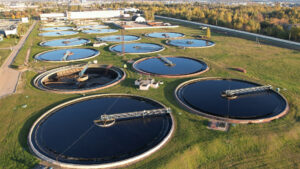
Sewage treatment plant manufacturers are not just equipment suppliers. The distinction is operational and financial — not transactional. Many businesses assume selecting a vendor is about comparing quotes, but poor decisions here lead to compliance penalties, operational downtime, and long-term cost escalation. Industrial facilities, real estate developers, and hospitality operators suffer the most when this is misunderstood, often facing regulatory risks and wasted capital. This guide explains how to evaluate sewage treatment plant manufacturers, understand cost structures, select the right process, and maximize ROI — specifically for decision-makers in the water & wastewater management industry.
What 2026 Data Reveals About Industrial Sewage Treatment Plant Manufacturers
- According to the Central Pollution Control Board (CPCB), over 70% of wastewater in India remains untreated, creating massive demand for industrial sewage treatment plant manufacturers.
→ Implication: Businesses ignoring treatment systems risk non-compliance and shutdown notices. - A 2025 report by NITI Aayog estimates the water reuse market will grow at 18–22% CAGR through 2030.
→ Implication: Investing in wastewater recycling systems is no longer optional—it’s a cost-saving strategy. - Industrial studies show companies adopting MBBR and SBR technology in STP reduce operational costs by up to 30%.
→ Implication: Choosing the right technology directly impacts ROI and lifecycle costs.
What this means: Selecting the best sewage treatment plant manufacturers is a strategic decision tied to compliance, sustainability, and long-term profitability.
What Sewage Treatment Plant Manufacturers Actually Cover
| Phase / Feature | What It Specifically Covers |
|---|---|
| Requirement Analysis | Site inspection, wastewater load calculation |
| STP Design and Installation | Custom engineering based on flow and contaminants |
| Technology Selection | MBBR, SBR, or hybrid biological sewage treatment process |
| Equipment Manufacturing | Tanks, aerators, clarifiers, filtration units |
| Compliance Planning | CPCB norms, pollution control approvals |
| Installation & Commissioning | On-site setup and testing |
| Automation Integration | SCADA systems, IoT monitoring |
| Maintenance & AMC | Regular servicing and performance optimization |
| Wastewater Recycling Systems | Reuse for flushing, cooling, irrigation |
| Upgrade & Expansion | Scaling decentralized wastewater treatment systems |
This lifecycle approach ensures industries get not just a system, but a long-term solution aligned with industrial water reuse solutions.
The Gap Nobody Is Talking About
Most buyers assume all industrial sewage treatment plant manufacturers offer similar capabilities. That assumption is wrong.
The real gap lies in process engineering depth vs. assembly-based supply. Many vendors simply assemble standard components without optimizing for actual wastewater composition. As a result, plants underperform, energy costs spike, and treated water fails compliance tests.
Implication: If your vendor is not customizing the biological sewage treatment process, you are not buying a solution—you are buying a future liability.
What Top Decision-Makers Do Differently
Top-performing industrial buyers don’t just compare prices—they evaluate lifecycle efficiency.
- They prioritize technology fit over upfront cost
For example, choosing between MBBR and SBR technology in STP based on load variability ensures stable performance. - They demand automation and monitoring systems
This reduces manual errors and ensures compliance with minimal intervention. - They focus on wastewater recycling systems
Reusing treated water reduces freshwater dependency and operational expenses. - They evaluate maintenance capabilities upfront
Because poor sewage treatment plant maintenance increases downtime and hidden costs.
5 Key Performance Drivers
- Technology Selection — determines efficiency — wrong choice leads to 25–30% higher OPEX
- Design Accuracy — impacts performance — poor design causes system overload
- Energy Consumption — affects ROI — inefficient aeration increases electricity bills
- Automation Level — reduces risk — lack of automation leads to compliance failure
- Maintenance Planning — ensures longevity — neglect results in early system breakdown
MBBR vs SBR — Decision Matrix
| Criteria | MBBR Technology | SBR Technology |
|---|---|---|
| Time to Value | Faster installation | Moderate setup time |
| Upfront Cost | Medium | Slightly higher |
| Long-Term Cost | Lower due to efficiency | Moderate |
| Durability | High | High |
| Risk Exposure | Low | Medium (batch process dependency) |
| Scalability | Easy expansion | Limited flexibility |
| Best Suited For | Industrial wastewater treatment systems | Municipal and batch operations |
Real-World Proof
Case Study 1: Textile Industry — Surat, India
- Problem: High chemical load wastewater, ₹15 lakh/month water cost
- Solution: Installed industrial sewage treatment plant with MBBR
- Outcome: 40% cost reduction + 90% water reuse within 6 months
Lesson: Right technology selection drives immediate ROI.
Case Study 2: Hospitality Sector — Bengaluru, India
- Problem: Non-compliance penalties due to outdated ETP solutions
- Solution: Upgraded to automated STP design and installation
- Outcome: 100% compliance + 25% reduction in operational cost
Lesson: Automation and compliance integration are non-negotiable.
How Resgroup Solves This
Resgroup operates as a full-stack partner among top STP manufacturers in India, combining custom engineering, advanced MBBR/SBR integration, and lifecycle support. Unlike standard vendors, the focus remains on scalable decentralized wastewater treatment and cost-efficient wastewater recycling systems tailored to each industry. This ensures consistent compliance, reduced operational costs, and long-term reliability.
👉 Talk to Resgroup to design a future-ready sewage treatment solution.
Evaluation Checklist
- Technology Fit — Does the system match your wastewater profile?
- Compliance Readiness — Is it aligned with CPCB norms?
- Lifecycle Cost — What is the 5-year operational cost?
- Automation Capability — Does it include monitoring systems?
- Vendor Expertise — Proven experience in industrial sewage treatment plant manufacturers
- Scalability — Can it expand with your business?
- Maintenance Support — Is AMC included?
- Water Reuse Potential — Can it support industrial water reuse solutions?
Mistakes to Avoid
- Choosing Based on Lowest Cost
Cheap systems often fail compliance and increase long-term expenses significantly. - Ignoring Technology Selection
Not evaluating MBBR and SBR technology in STP leads to inefficiencies. - Overlooking Maintenance Planning
Without proper sewage treatment plant maintenance, system performance drops quickly. - Not Planning for Reuse
Skipping wastewater recycling systems eliminates potential ROI benefits. - Selecting Generic Vendors
Not all commercial sewage treatment plant manufacturers provide industry-specific solutions.
Frequently Asked Questions
Q: How to choose the right sewage treatment plant manufacturers in India?
A: Evaluate experience, technology expertise, and compliance track record. Additionally, focus on lifecycle cost rather than upfront pricing. Always check if the vendor offers customized industrial wastewater treatment systems. Finally, ensure they provide long-term maintenance support.
Q: What is the cost of installing an industrial sewage treatment plant in 2026?
A: Costs vary based on capacity, technology, and automation level. Typically, industrial setups range from ₹5 lakh to ₹50 lakh+. However, advanced wastewater recycling systems reduce long-term costs significantly. Therefore, ROI should be the primary evaluation metric.
Q: Which technology is best for sewage treatment plants: MBBR or SBR?
A: It depends on your operational needs. MBBR suits continuous industrial flow, while SBR works well for batch processing. Both are widely used by best sewage treatment plant manufacturers. Choosing incorrectly can increase operational costs.
Q: How do sewage treatment plants improve ROI for industries?
A: They reduce freshwater consumption, ensure compliance, and eliminate penalties. Additionally, industrial water reuse solutions create long-term savings. Over time, the system pays for itself through reduced operational costs.
Q: What are the compliance requirements for sewage treatment plants in India?
A: CPCB and state pollution boards mandate strict discharge standards. Businesses must meet parameters for BOD, COD, and TSS levels. Working with top STP manufacturers in India ensures compliance. Non-compliance can lead to heavy penalties or shutdowns.
Conclusion
Sewage treatment plant manufacturers are not just vendors—they are long-term operational partners. Choosing the right industrial sewage treatment plant manufacturers determines whether your system becomes a cost center or a profit-driving asset. With increasing regulatory pressure and water scarcity, investing in the right wastewater solution is a strategic necessity. For official compliance guidelines, refer to the Central Pollution Control Board standards .
👉 Connect with Resgroup to build a high-efficiency, future-ready sewage treatment system.