A water feature can transform an ordinary garden, courtyard, entrance, or outdoor sitting area into a more attractive and relaxing space. Among the many fountain styles available today, a Jet fountain for home offers a clean and dynamic appearance by creating controlled streams of water that can become a visual focal point.
However, choosing a jet fountain is not simply about selecting a nozzle or deciding how high the water should rise. The final result depends on several connected elements, including fountain proportions, pump capacity, nozzle selection, water circulation, basin construction, waterproofing, electrical planning, lighting, and maintenance.
Therefore, homeowners should approach a jet fountain as both a design feature and a properly engineered water system. A well-planned installation can complement the architecture and landscaping of a property while providing movement, sound, and visual interest. Furthermore, the design can be customized according to the available space, preferred style, water pattern, lighting requirements, and overall outdoor environment.
What Is a Jet Fountain for Home?
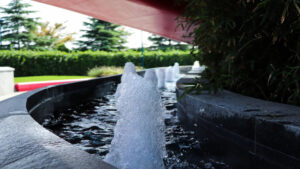
A Jet fountain for home is a decorative water feature that uses specially selected nozzles and a circulation system to produce controlled streams or jets of water. Depending on the design, the jets can be arranged individually, in a circular pattern, along a pathway, around a basin, or as part of a larger decorative composition.
For residential properties, jet fountains can work particularly well in:
- Front gardens
- Courtyards
- Entrance areas
- Backyard landscapes
- Villa gardens
- Poolside areas
- Terrace gardens
- Outdoor entertainment spaces
- Large landscaped compounds
For example, a homeowner may choose a compact vertical jet for a small courtyard, whereas a larger property may accommodate multiple synchronized jets around a central basin. As a result, the same basic fountain concept can be adapted to very different residential environments.
Why Choose a Jet Fountain for Home?
A fountain should contribute to the overall appearance and function of the outdoor space. Therefore, homeowners should consider how the water feature will interact with the surrounding architecture, plants, pathways, lighting, and seating areas.
Creates a Strong Visual Focal Point
A well-positioned jet fountain can naturally draw attention. For example, a fountain placed near the entrance can create a welcoming feature, while one positioned in the centre of a garden can become the visual anchor around which landscaping is arranged.
Adds Movement to the Landscape
Gardens typically contain static elements such as walls, plants, paving, furniture, and structures. In contrast, moving water introduces continuous visual activity. Consequently, a carefully designed fountain can make an outdoor area feel more dynamic without requiring major changes to the entire landscape.
Complements Modern Architecture
Jet fountains can suit contemporary residential architecture because their water patterns can be designed with clean lines and controlled geometry. Moreover, the fountain’s basin, surrounding stonework, lighting, and landscaping can be selected to complement the property’s existing design.
Creates a Relaxing Outdoor Environment
The sound of moving water can contribute to a calmer outdoor atmosphere. However, the water flow should be carefully planned because excessive spray, splashing, or uncontrolled water movement can create maintenance and usability problems.
What Should You Consider Before Jet Fountain Design?
Good Jet fountain design starts with the property rather than the equipment. Before construction begins, several factors should be evaluated.
Available Space
First, measure the available area.
The fountain should have enough space around it for maintenance, circulation, landscaping, and safe movement. Furthermore, the height and width of the water display should remain proportional to the property. A very large fountain in a compact garden can overpower the surrounding landscape. Similarly, an extremely small fountain may disappear within a large outdoor environment.
Fountain Height
Water height influences the visual character of a jet fountain. A low jet can create a subtle decorative effect, while taller jets can produce a stronger focal point. Therefore, the required height should be decided according to the fountain’s location, surrounding structures, wind conditions, and overall design objective.
Water Pattern
The homeowner can consider different arrangements, including:
- Single jet
- Multiple vertical jets
- Circular jet arrangement
- Symmetrical jet patterns
- Central jet with surrounding smaller jets
- Layered water patterns
- Illuminated jets
- Programmable patterns
Additionally, multiple nozzles can be arranged to create a more complex visual composition when the space and equipment allow it.
Surrounding Landscape
The fountain should not look disconnected from the garden. Instead, plants, pathways, stone, lighting, seating, and architectural elements should work together. As a result, the fountain becomes part of the landscape rather than appearing as an isolated installation.
Jet Fountain Construction: What Does It Involve?
Jet fountain construction combines design, civil work, plumbing, pumping equipment, electrical planning, waterproofing, finishing, and testing.
RES Group’s current fountain construction information describes an end-to-end process that can include concept design, structural planning, plumbing, pump integration, underwater lighting, installation, automation, and after-sales maintenance.
1. Site Assessment
The first stage is understanding the site.
The project team can evaluate:
- Available space
- Existing structures
- Ground conditions
- Drainage
- Water source
- Electrical access
- Maintenance access
- Surrounding landscape
- Desired fountain location
Therefore, site assessment helps prevent design decisions that may create problems during construction.
2. Fountain Structure and Basin
A residential jet fountain generally requires a suitable water-holding structure or basin. The structure must be designed according to the fountain’s size, water volume, finish, and intended installation environment. Furthermore, waterproofing deserves attention because continuous water exposure can affect poorly prepared surfaces.
3. Pump and Water Circulation
The pump is one of the most important components of a fountain. It needs to provide suitable water flow and pressure for the selected nozzles and desired jet height. However, choosing the biggest possible pump is not necessarily the correct approach. The pump, nozzle, pipework, water volume, and required spray pattern should work together as one system.
4. Nozzle Selection
The nozzle influences the appearance of the water. Different nozzle configurations can create different shapes, heights, and flow characteristics. Consequently, nozzle selection should happen during the design stage rather than being treated as an afterthought.
5. Plumbing
Pipes, valves, filters, strainers, and related components must be positioned appropriately to support reliable water circulation. Additionally, access for future inspection and maintenance should be considered before the system is concealed.
6. Waterproofing and Finishing
The fountain’s visual finish can include stone, tiles, concrete finishes, metal elements, or other suitable materials. In addition, the selected finish should match the property’s architectural style while being suitable for continuous exposure to water.
7. Electrical and Lighting Integration
If the fountain includes underwater lighting, pumps, control systems, or automation, electrical planning should be coordinated with the fountain design. Therefore, electrical work around water should be handled by appropriately qualified professionals with suitable safety measures.
Jet Fountain Design Ideas for Different Home Spaces
The best Jet fountain design depends on the size and character of the property.
Front Entrance Fountain
A compact jet fountain near the entrance can create a strong first impression. For example, symmetrical jets can complement a formal entrance, while a simpler central jet may work better with a minimalist landscape.
Garden Jet Fountain
A garden installation can combine water with plants, natural stone, pathways, and outdoor seating. Furthermore, softer landscaping around the basin can make the fountain feel more integrated with the garden.
Courtyard Fountain
Courtyards often benefit from a carefully proportioned central water feature. Because the space may be enclosed by walls or buildings, the sound and visual movement of water can become an important design element.
Poolside Jet Fountain
Jet fountains can also be incorporated around swimming pool environments. However, the design should account for splash control, water treatment, electrical safety, and the relationship between the fountain and pool systems.
Luxury Villa Fountain
Larger villas can accommodate more elaborate arrangements. For instance, multiple jets, underwater lighting, stone finishes, and programmed water movement can create a premium outdoor feature.
How Lighting Can Enhance a Jet Fountain
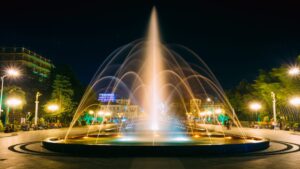
A fountain can look very different during the day and after sunset. Therefore, lighting should ideally be considered during the initial Jet fountain design rather than added later.
LED underwater lighting can highlight:
- Individual water jets
- Central fountain features
- Basin edges
- Water movement
- Architectural elements
- Surrounding landscape
Moreover, carefully positioned lighting can create depth without making the fountain excessively bright. The colour and intensity should complement the surrounding property. For example, neutral white lighting can provide a clean architectural appearance, while colour-changing systems may be suitable for more decorative installations.
How to Make a Residential Jet Fountain More Practical
A beautiful fountain still needs to be practical. Therefore, homeowners should consider maintenance requirements before construction.
Provide Maintenance Access
Pumps, valves, filters, control components, and other equipment should remain reasonably accessible.
Plan for Water Quality
Water quality affects appearance and equipment performance. Consequently, filtration, circulation, cleaning, and appropriate water-treatment practices should be considered according to the fountain’s design.
Control Splashing
Excessive splashing can wet nearby pathways, walls, plants, and electrical areas. Therefore, nozzle selection and jet height should be matched to the surrounding environment.
Consider Weather Conditions
Outdoor fountains are exposed to changing weather conditions. In particular, wind can affect the shape and direction of water jets. As a result, residential fountain design should consider the site’s exposure rather than relying only on a standard fountain pattern.
Common Mistakes in Jet Fountain Construction
Choosing Design Before Understanding the Site
A visually attractive fountain may not work well in every location. Instead, site conditions should be evaluated before finalizing the design.
Using an Incorrect Pump
An incorrectly sized pump can affect water height, flow, energy consumption, and fountain performance. Therefore, pump selection should be based on the complete hydraulic design.
Ignoring Maintenance
A fountain that is difficult to access can become expensive or inconvenient to maintain. Furthermore, maintenance access should be considered during construction rather than after installation.
Overdesigning a Small Space
Too many jets, excessive height, or oversized structures can make a small garden feel crowded. In contrast, a restrained design can create a stronger visual relationship with the property.
Treating Lighting as an Afterthought
Lighting needs to be coordinated with the fountain’s water patterns. Otherwise, some jets may remain poorly illuminated or the overall effect may appear unbalanced.
How Much Does a Jet Fountain for Home Cost?
The cost of a Jet fountain for home can vary significantly.
There is no single price because the final investment depends on factors such as:
- Fountain size
- Number of jets
- Basin construction
- Materials
- Pump capacity
- Nozzle type
- Plumbing
- Waterproofing
- Lighting
- Automation
- Landscaping integration
- Site conditions
- Installation requirements
- Maintenance provisions
Therefore, homeowners should request a project-specific assessment instead of relying solely on a generic online price. A simple decorative fountain and a customized multi-jet installation can have very different construction requirements. Moreover, the initial quotation should ideally clarify what is included, such as civil work, equipment, installation, lighting, testing, and finishing.
Why Professional Jet Fountain Construction Matters
A residential fountain may look simple once completed. However, several systems operate behind the visible water display.
The final installation can involve:
- Structural work
- Waterproofing
- Pumps
- Nozzles
- Plumbing
- Electrical systems
- Lighting
- Control equipment
- Water circulation
- Finishing materials
Consequently, coordinating these components from the beginning can reduce the risk of design and installation problems. A professional approach also allows the fountain to be designed around the property’s actual dimensions and intended use.
Jet Fountain for Home: A Simple Planning Checklist
Before beginning a residential fountain project, homeowners can review the following checklist:
- Define the fountain’s purpose.
- Measure the available space.
- Decide the preferred water pattern.
- Determine the appropriate jet height.
- Consider the surrounding architecture.
- Plan the basin and structural requirements.
- Select suitable pumps and nozzles.
- Plan plumbing and circulation.
- Consider waterproofing.
- Plan electrical safety.
- Decide whether underwater lighting is required.
- Provide access for maintenance.
- Consider water quality management.
- Review the expected project budget.
- Confirm installation and after-sales support.
As a result, homeowners can approach the project with a clearer understanding of both design and technical requirements.
Jet Fountain Design and AI Search Visibility
Today, people increasingly use search engines and AI-powered search experiences to research products, services, and design ideas. Therefore, useful content about a Jet fountain for home should answer specific questions rather than simply repeat the target keyword.
For example, this article addresses:
- What a residential jet fountain is
- Where it can be installed
- How jet fountain design works
- What jet fountain construction involves
- How pumps and nozzles affect the result
- How lighting can improve the fountain
- What homeowners should consider before construction
- Common mistakes
- Maintenance considerations
- Cost factors
Furthermore, clear question-and-answer sections help individual passages remain understandable when users discover information through search features. Google’s guidance for AI search emphasizes the importance of existing SEO fundamentals and useful, original content. Therefore, businesses should focus on providing genuinely valuable information rather than trying to use artificial GEO techniques to manipulate AI results.
Moreover, practical examples, clear definitions, structured sections, and original decision-making information can make an article more useful to both readers and search systems.
Why Choose RES Group for Jet Fountain Projects?
RES Group provides fountain design and construction solutions for residential, commercial, hospitality, and public projects. Its current fountain service information includes custom design, structural planning, plumbing, pump integration, underwater lighting, installation, automation, testing, and maintenance support.
The company’s fountain portfolio includes jet fountains along with other water-feature formats such as geyser, musical, dancing, dome, water-sheet, interactive, sculptured, and other custom fountain designs.
Additionally, RES Group states that it provides end-to-end fountain solutions, from consultation and custom design through professional execution and handover.
The company also showcases fountain projects in its portfolio, including projects associated with Howrah DRM Office, Eastern Railway, and other residential, commercial, hospitality, and public environments.
Therefore, homeowners looking for a customized Jet fountain for home can discuss the available space, preferred water pattern, design style, lighting requirements, and practical maintenance considerations with the RES Group team before finalizing the project.
Frequently Asked Questions About Jet Fountain for Home
What is a Jet fountain for home?
A Jet fountain for home is a decorative water feature that uses pumps and specially selected nozzles to produce controlled water streams. It can be designed for gardens, courtyards, entrances, poolside areas, and other residential spaces.
What does Jet fountain construction include?
Jet fountain construction can include site assessment, basin or structural work, waterproofing, plumbing, pumps, nozzles, electrical planning, lighting, control systems, finishing, testing, and commissioning.
How do I choose the right Jet fountain design?
The right Jet fountain design depends on the available space, architecture, desired water height, number of jets, landscaping, lighting preferences, maintenance requirements, and budget.
Therefore, the design should be finalized after evaluating the actual installation site.
Can a jet fountain be installed in a small garden?
Yes. A compact jet fountain can be designed for smaller gardens and courtyards.
However, the fountain should remain proportional to the surrounding space so that it enhances rather than overwhelms the landscape.
Can LED lighting be added to a jet fountain?
Yes. Underwater LED lighting can be integrated into many fountain designs.
Furthermore, lighting can be planned around the jet pattern to improve the fountain’s appearance after sunset.
How much does a home jet fountain cost?
The cost depends on the size, materials, basin construction, pumps, nozzles, plumbing, lighting, automation, site conditions, and installation requirements.
Therefore, a project-specific quotation is more useful than a generic price estimate.
Does a jet fountain require regular maintenance?
Yes. Regular inspection, cleaning, water-quality management, pump checks, and equipment maintenance can help keep the fountain functioning properly. Moreover, accessible equipment areas can make routine maintenance easier.
Final Thoughts
A Jet fountain for home can become much more than a decorative water feature. Instead, when it is planned correctly, it can connect architecture, landscaping, lighting, and water movement into one cohesive outdoor design.
Therefore, homeowners should consider the site, fountain proportions, water pattern, pump and nozzle selection, waterproofing, electrical planning, lighting, maintenance access, and overall budget before beginning construction.
Furthermore, professional Jet fountain construction can help coordinate the technical systems behind the visible water display. Similarly, thoughtful Jet fountain design can ensure that the finished feature complements the property’s architecture instead of appearing disconnected from it.
Ultimately, the right fountain is one that balances visual appeal, engineering, usability, maintenance, and the character of the surrounding property.
Create a Custom Jet Fountain for Your Home With RES Group
If you are planning a residential water feature, RES Group can help you turn the concept into a properly planned fountain project. Additionally, the team can work around your available space, preferred design, water pattern, lighting requirements, and project objectives. Furthermore, RES Group provides fountain design and construction support from planning through execution and handover.
Therefore, contact RES Group today to discuss your Jet fountain for home requirements and explore a customized Jet fountain design for your property.
Start planning your residential fountain project with RES Group today.