Choosing an outdoor water fountain manufacturer in India affects how your fountain looks, how long it lasts, and how much upkeep it needs. Fountains face strong sun, monsoon rain, dust, hard water, and algae, so materials and build quality matter as much as design. This guide covers fountain types, materials, key components, cost factors, and how to choose a reliable manufacturer for a home, hotel, park, or commercial project.
What Is an Outdoor Water Fountain?
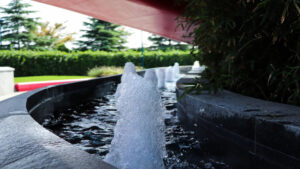
An outdoor water fountain is a water feature built for gardens, courtyards, entrances, terraces, or public spaces. A pump circulates water through pipes, nozzles, or spillways, creating movement and sound. Most fountains recirculate the same water from a basin, so they use little water once filled.
People install fountains to improve the look of a space, add soothing sound, and create a focal point.
What Does an Outdoor Water Fountain Manufacturer Do?
A manufacturer designs, fabricates, and often installs fountains instead of only reselling them. This usually includes:
- Designing custom shapes, sizes, and finishes
- Making the body in the chosen material
- Fitting pumps, nozzles, lights, and controls
- Testing the fountain before dispatch
- Delivering and installing at the site
- Offering maintenance support
Manufacturer vs. Supplier vs. Trader
| Type | What they do | What to expect |
|---|---|---|
| Manufacturer | Makes the fountain in its own facility | Customization, direct quality control, and clearer after-sales responsibility |
| Supplier or dealer | Sells fountains made by others | Ready designs, with limited customization |
| Trader | Buys and resells with little technical involvement | Lower accountability for defects and design changes |
Ask any seller whether they fabricate in-house, and request photos or a visit to the workshop.
Which Types of Outdoor Water Fountains Are Available?
| Type | Description | Best for |
|---|---|---|
| Tiered fountain | Water flows down multiple levels | Gardens, villas, entrances |
| Wall fountain | Water runs down a wall panel or spout | Small spaces, patios, boundary walls |
| Floor or pedestal fountain | Stands alone with a central feature | Lawns, courtyards, lobbies |
| Statue or traditional fountain | Features sculpted figures or motifs | Heritage styles, temples, luxury homes |
| Pond or floating fountain | Sits in or on a pond or lake | Large ponds, resorts, campuses |
| Contemporary or abstract fountain | Uses clean lines, metal, or glass | Offices, hotels, modern homes |
| Plaza or dry-deck fountain | Jets rise from ground-level nozzles | Malls, parks, public squares |
| Musical or dancing fountain | Synchronizes water, light, and sound | Parks, theme spaces, large venues |
| Solar fountain | Runs on a solar-powered pump | Small gardens and bird baths |
The best choice depends on space, budget, power access, and the look you want.
Which Materials Are Used for Outdoor Fountains?
| Material | Strengths | Trade-offs |
|---|---|---|
| FRP (fibreglass reinforced plastic) | Lightweight, durable, weather resistant, easy to mold into designs | Needs good finishing and UV-stable coating |
| Natural stone (granite, sandstone, marble) | Premium look and long life | Heavy, costly, and can stain or weather |
| Concrete or GRC | Strong, flexible shapes, suitable for large installations | Needs proper sealing and finishing |
| Terracotta or ceramic | Traditional look and affordable | Fragile and can crack |
| Metal (brass, bronze, stainless steel) | Elegant, modern, and durable | Can corrode or tarnish depending on grade and water |
| Resin or polyresin | Light, detailed, and budget friendly | Less suited to heavy commercial use |
For hot, sunny regions, ask about UV protection and finish quality. For hard-water areas, ask how the surface resists scale.
What Conditions in India Affect Fountain Choice?
- Strong sun: UV can fade paint and weaken poor-quality plastics.
- Monsoon rain: Basins can overflow, so drainage and overflow outlets matter.
- Dust and leaves: Fountains need filters and easy-to-clean basins.
- Hard water: Mineral deposits can clog nozzles and stain surfaces.
- Algae growth: Warm, still water speeds up algae, so circulation and cleaning matter.
- Cold regions: In places that freeze, water inside pipes and pumps can crack parts, so plan for drainage and winter care.
- Power cuts: Consider whether the fountain needs a backup option or a solar pump.
A good manufacturer will ask about your location and water quality before recommending a design.
What Components Make Up a Fountain?
| Component | Role |
|---|---|
| Pump | Circulates water; sized to the fountain’s height and flow |
| Nozzles and jets | Shape the water pattern |
| Basin or reservoir | Holds the recirculating water |
| Piping and valves | Carry water and control flow |
| Filter or strainer | Keeps debris out of the pump |
| Lighting | Adds night effects; should be water-rated |
| Control panel or timer | Switches pump and lights, sometimes with scenes |
| Water level control | Prevents the pump from running dry |
The pump is the heart of the fountain. An undersized pump gives weak flow, while an oversized pump wastes power and splashes water outside the basin.
How Do You Choose the Right Fountain for Your Space?
- Measure the area: Allow room for the basin, walkways, and splash zone.
- Check the site: Look at sunlight, wind, nearby trees, and surface strength.
- Plan power and water access: You need a safe electrical supply and a way to top up and drain water.
- Pick the style: Match the fountain to the building and landscape.
- Set a budget: Include the fountain, installation, civil work, and maintenance.
- Think about sound and splash: Taller jets make more noise and spray.
- Plan maintenance: Choose designs that are easy to reach and clean.
Where Are Outdoor Fountains Used?
| Setting | Typical use |
|---|---|
| Homes and villas | Garden centerpiece, entrance feature, terrace accent |
| Hotels and resorts | Lobby approach, lawns, pool areas |
| Housing societies | Entrances and community gardens |
| Corporate campuses | Reception forecourts and landscaped courtyards |
| Malls and public spaces | Plazas and atriums |
| Temples and institutions | Traditional or decorative water features |
| Parks and gardens | Large feature fountains and ponds |
| Restaurants and cafés | Outdoor seating ambience |
Some owners also follow Vastu or other cultural guidance when placing water features. If that matters to you, discuss it with a qualified expert and share the recommendations with the manufacturer.
How Much Does an Outdoor Water Fountain Cost in India?
Fountain price in India varies widely, so ask for a written quote rather than relying on averages. The main factors are:
- Size and scale: Larger fountains need more material and labor.
- Material: Natural stone usually costs more than FRP or resin.
- Design complexity: Custom sculpting and multiple tiers add cost.
- Pump and nozzle quality: Better equipment costs more but lasts longer.
- Lighting and controls: Colored or programmable systems add to the budget.
- Civil and plumbing work: Foundations, drainage, and water lines may be extra.
- Transport and installation: Heavy items cost more to deliver and place.
- Maintenance plan: Annual service contracts add recurring cost.
Compare quotes on a like-for-like basis: same material, same pump rating, and same scope of installation.
What Is the Fountain Manufacturing and Installation Process?
- Consultation: Share your space, budget, and style preferences.
- Site survey: The team checks dimensions, power, water, and drainage.
- Design and visualization: You review drawings or 3D images.
- Quotation and approval: Confirm materials, specifications, and timelines.
- Fabrication: The fountain body and fittings are made.
- Quality check: The manufacturer tests the finish and, where possible, the water flow.
- Delivery: The fountain is packed and transported with care.
- Installation and commissioning: The team fixes it in place, connects the pump and lights, and tests it.
- Handover and training: You receive operating and cleaning instructions.
How Do You Choose an Outdoor Water Fountain Manufacturer in India?
Use this checklist:
- In-house manufacturing: Ask to see the workshop or recent production photos.
- Material transparency: Get exact material types, thickness, and coatings in writing.
- Past projects: Review completed work similar to yours, and speak to previous clients.
- Customization ability: Confirm they can create custom sizes, finishes, and designs.
- Pump and equipment quality: Ask which pump and light brands they use.
- Installation capability: Check whether they install across your city or region.
- Warranty and service: Clarify what is covered and who handles repairs.
- Delivery and logistics: Ask how fountains are packed and shipped, especially large pieces.
- Clear pricing: Request an itemized quote with inclusions and exclusions.
- Timelines: Get realistic dates for design, production, and installation.
Red flags: very low prices with no material details, refusal to show past work, no written warranty, or pressure to pay the full amount upfront.
How Do You Keep Fountains Safe?
Water and electricity need careful handling. Ask your manufacturer and electrician to ensure:
- Pumps and lights are rated for underwater use
- Proper earthing and a residual current protection device (RCCB or ELCB) are installed
- Wiring is waterproofed and kept clear of walkways
- Low-voltage lighting is used where suitable
- Basin edges and water depth suit the people using the space, especially children and pets
- Only qualified people carry out electrical work
How Do You Maintain an Outdoor Fountain?
- Clean the basin and filter regularly to remove leaves and dust.
- Control algae with regular cleaning, shade, and suitable water treatment recommended by your manufacturer.
- Top up water so the pump does not run dry.
- Remove scale from nozzles and surfaces in hard-water areas.
- Check the pump for noise, weak flow, or blockages.
- Inspect lights and wiring for damage or moisture.
- Prepare for cold weather by draining water in regions that freeze.
- Wipe or reseal surfaces as advised for the material.
An annual maintenance contract can be useful for larger or commercial fountains.
What Mistakes Should You Avoid?
- Choosing a design before checking space, power, and drainage
- Buying only on price without confirming materials
- Using an undersized or oversized pump
- Ignoring maintenance access and cleaning needs
- Placing a fountain under heavy tree cover without a filter plan
- Skipping electrical safety measures
- Forgetting overflow and monsoon drainage
How Can RES Group Help?
RES Group is a Kolkata-based company that has completed fountain construction projects for both residential and commercial properties, and also works as a swimming pool contractor across India. Its listed range includes garden fountains, pond fountains, fountain nozzles, LED underwater lighting, and swimming pool design and construction. It also partners with OASE, a global name in fountain and water technology, and a separate product listing shows it offering water sheet fountains made in India. To discuss a fountain for your home, hotel or commercial project contact RES Group
Frequently Asked Questions About Outdoor Water Fountain Manufacturers in India
What does an outdoor water fountain manufacturer do?
A manufacturer designs and builds fountains, fits pumps and lights, and often delivers and installs them. This allows more customization than buying a ready-made item from a reseller.
Which material is best for outdoor fountains in India?
FRP is popular for its light weight and weather resistance. Natural stone offers a premium look but costs more. The best choice depends on your budget, design, and climate.
How much does an outdoor fountain cost?
Cost depends on size, material, design, pump, lighting, and installation. Ask for an itemized written quote.
Can I get a custom fountain design?
Yes. Many manufacturers create custom sizes, shapes, and finishes. Ask to review drawings or 3D visuals before approving production.
Do outdoor fountains need a lot of maintenance?
They need regular cleaning, water top-ups, and pump checks. Hard water, algae, and falling leaves can increase the workload.
Can fountains run on solar power?
Small fountains and bird baths can use solar pumps. Larger fountains usually need a regular electrical supply.
How long does it take to make and install a fountain?
Timelines depend on size, materials, and design. Ask the manufacturer for a written schedule covering design, fabrication, delivery, and installation.
Conclusion
A well-chosen outdoor water fountain adds beauty, sound, and character to a space, but only if it is built with suitable materials and equipment. Check the manufacturer’s workshop and past projects, confirm materials in writing, plan for electrical safety, and think about maintenance before you buy. Compare itemized quotes, then choose the manufacturer that offers quality, clear communication, and dependable after-sales support.