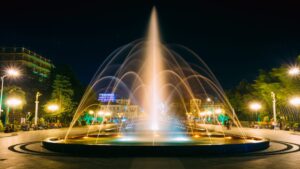
Picture yourself at dusk in a bustling Indian city square: water arcs soar skyward, twist gracefully, and crash in perfect rhythm with thumping beats or soulful melodies. Colorful lights pulse through the spray, lasers weave patterns in the mist, and crowds gather in awe. This isn’t fantasy—it’s the reality delivered by a skilled dancing fountain supplier in India who turns public spaces into living spectacles.
Today, these installations go far beyond simple water features. They combine engineering precision, artistic vision, and cutting-edge technology to create unforgettable experiences. Whether for smart city revitalization, luxury resorts, or commercial plazas, partnering with an experienced fountain construction company ensures every jet, light, and note aligns flawlessly.
Recent market insights show the Asia-Pacific musical dancing fountain sector valued at around USD 1.2 billion in 2024, with strong projections toward USD 2.5 billion by 2033 at a CAGR of approximately 9.2%. India contributes significantly through urban renewal programs and tourism boosts. Consequently, demand rises for innovative, durable, and sustainable solutions tailored to local conditions.
A professional fountain construction company brings proven expertise in handling India’s varied climates—from humid coastal zones to dry inland regions—while meeting safety and environmental standards.
What Are the Latest Trends Shaping Dancing Fountains in India Right Now?
Technology drives rapid evolution in this field. Several standout trends define current installations across the country.
Multimedia Integration Takes Center Stage
A leading dancing fountain supplier India now delivers truly immersive experiences by seamlessly blending water choreography with RGB LED lighting, high-resolution lasers, video projections, and even controlled fire elements in select designs. These advanced multimedia setups create stunning 2D and 3D water patterns that respond in real time to music—ranging from soulful Indian classical ragas and devotional bhajans to high-energy Bollywood tracks and international EDM.
For example, recent high-profile revamps such as the iconic musical fountain in Thenmala, Kerala, and several upgraded installations in Gujarat and Uttar Pradesh showcase rich audio-visual harmony that draws significantly larger evening crowds to ecotourism sites, public parks, and heritage precincts. Professional suppliers achieve this level of synchronization through DMX512 protocols, custom sequencing software, and precisely timed pump-valve control, ensuring every jet, light transition, and laser sweep feels perfectly choreographed.
Floating and Expansive Lake Displays Gain Popularity
Floating musical fountains eliminate the need for permanent basins, making them ideal for lakes, reservoirs, and waterfronts. These systems use buoyant platforms with powerful pumps and nozzles to create sweeping displays over large water bodies.
Notable examples include large-scale floating installations in Ahmedabad and Hyderabad, where 100-meter-wide setups deliver immersive shows visible from afar.
Interactive and Dry-Deck Fountains Engage Visitors Directly
Interactive dry-deck fountains allow people to walk among the jets, which activate via sensors or apps. Families love these in malls, parks, and plazas because they combine fun with safety—no standing water on the surface.
Cities increasingly adopt them in pedestrian zones to encourage community interaction.
Sustainability Features Become Standard
Eco-conscious designs now include advanced water recycling systems, variable-frequency pumps that adjust power usage, and low-energy LED arrays. These reduce consumption while maintaining spectacular performance, aligning with national goals for greener urban spaces.
Smart Controls and IoT Connectivity
Remote monitoring via cloud platforms lets operators adjust shows, diagnose issues, and schedule maintenance from anywhere. DMX protocols enable precise synchronization, while AI elements fine-tune patterns in real time.
Industry observers note that smart city initiatives across India incorporate these features in public plazas, roundabouts, and tourism hubs, enhancing livability and visitor appeal.
Additionally, events like themed fountain marathons and festivals showcase synchronized displays running for extended hours, blending traditional and modern music.
Why Partnering with a Reputable Dancing Fountain Supplier in India Matters
Choosing the right partner directly impacts project success. Experienced suppliers understand regional challenges like high temperatures, monsoons, and dust, selecting corrosion-resistant materials and protective coatings accordingly.
They maintain comprehensive portfolios spanning residential, commercial, and government projects. Many deliver floating setups in Gujarat, arched multimedia displays, and interactive features in northern cities.
Furthermore, they navigate approvals, integrate with existing infrastructure, and provide robust warranties plus training. This minimizes delays and ensures long-term reliability.
What Does the Complete Project Process Look Like from Start to Finish?
A well-executed dancing fountain follows clear, sequential phases. Each step builds on the previous one for flawless results.
Phase 1: Discovery and Feasibility Study
Everything starts with in-depth consultation. Experts conduct on-site surveys to assess dimensions, water availability, electrical capacity, soil conditions, and accessibility.
They discuss your vision—public attraction, hotel centerpiece, or corporate landmark—and prepare initial concepts plus 3D renderings.
Phase 2: Detailed Design and Visualization
Engineers create precise technical drawings. They select nozzle types (high-jet, cascade, fan, rotating), pump capacities, lighting configurations, and control systems.
Specialized software simulates the entire show, allowing virtual walkthroughs. Client revisions refine choreography, music cues, and visual effects.
Phase 3: Component Sourcing and Fabrication
High-grade materials arrive—stainless steel nozzles, submersible pumps, underwater RGB fixtures, and programmable controllers. Custom fabrication happens for unique elements like arched frames or floating platforms.
All parts undergo factory testing for pressure, alignment, and electrical safety.
Phase 4: Civil and Structural Work
Excavation begins for basins or foundations. Reinforced concrete structures support heavy loads. Waterproofing layers prevent leaks.
For dry-deck types, underground reservoirs and drainage systems install carefully.
Phase 5: Mechanical, Electrical, and Plumbing Installation
Piping networks lay out precisely. Pumps position with vibration dampers. Nozzles align for exact spray patterns.
Electrical wiring uses weatherproof conduits. Lighting fixtures mount securely underwater or overhead.
Floating systems assemble buoyant frames first, then secure equipment.
Phase 6: Software Programming and Show Choreography
Technicians load music tracks and map sequences using DMX or proprietary software. Water heights, speeds, and directions sync with beats, lights, and effects.
Multiple dry runs adjust timing for seamless flow.
Phase 7: Comprehensive Testing, Commissioning, and Handover
Full rehearsals test every scenario—daytime, nighttime, different weather. Safety interlocks verify operation.
Client walkthroughs confirm satisfaction. Operators receive hands-on training for daily management and basic troubleshooting.
Professional teams often remain on call for initial shows.
The entire timeline varies: smaller projects wrap in 3–6 months, while grand installations take 8–12+ months depending on scale and approvals.
Here’s a summarized process table for quick reference:
| Phase | Main Activities | Typical Duration | Key Deliverables |
|---|---|---|---|
| 1. Discovery | Site survey, goal alignment | 2–4 weeks | Concept report, feasibility study |
| 2. Design | Drawings, 3D simulations | 4–8 weeks | Approved blueprints, renderings |
| 3. Fabrication | Component manufacturing | 6–12 weeks | Tested equipment ready for delivery |
| 4. Civil Work | Excavation, foundations | 4–10 weeks | Structural base complete |
| 5. Installation | Piping, pumps, wiring | 6–12 weeks | All systems physically in place |
| 6. Programming | Show sequencing, sync | 3–6 weeks | Choreographed performance files |
| 7. Testing & Handover | Trials, training | 2–4 weeks | Operational fountain, trained staff |
Read more :Best Fountain Design & Safety Guide: How to Plan Stunning Water Features in Kolkata
How Do These Fountains Transform Urban and Tourism Landscapes?
Beyond beauty, dancing fountains serve practical purposes. They increase footfall in commercial areas, extend evening dwell time in malls, and support cultural events.
In tourism destinations, they become signature attractions—think evening crowds gathering for synchronized shows featuring regional music.
Smart city projects in states like Gujarat, Uttar Pradesh, and Kerala integrate them into revitalized public spaces, roundabouts, and lakes, fostering community pride.
Projects like those in Rajkot’s Atal Sarovar or Bareilly’s walkover displays demonstrate how these features elevate ordinary locations into vibrant landmarks.
What Ongoing Maintenance Keeps the Fountain Performing at Its Best?
Preventive care extends lifespan and maintains wow factor.
- Inspect pumps and filters monthly to avoid blockages.
- Clean nozzles regularly for consistent jet shapes.
- Test lighting and controls quarterly.
- Analyze water chemistry to prevent scaling or corrosion.
- Schedule annual deep servicing for software updates and component checks.
Trained local teams handle routine tasks, while suppliers provide expert support for complex issues.
For urban water feature guidelines, explore the official Smart Cities Mission portal at smartcities.gov.in.
FAQs
Which key elements should I evaluate when choosing a dancing fountain supplier in India?
Focus on their track record with similar-scale projects, technology stack (DMX, IoT), material quality for Indian conditions, after-sales service network, and client testimonials from completed installations.
How do floating musical fountains differ from traditional basin types?
Floating versions operate on water surfaces using anchored platforms, allowing massive coverage without large concrete basins. They suit lakes and reservoirs perfectly and offer easier relocation if needed.
What role does music synchronization play in modern dancing fountain designs?
Synchronization forms the core experience—software maps water movements, light changes, and special effects to audio tracks, creating emotional impact whether using Indian classical, devotional, or popular songs.
Can dancing fountains integrate with existing smart city infrastructure in India?
Yes, many incorporate IoT for remote control, align with city monitoring systems, and support public Wi-Fi or app-based interactions, enhancing overall urban connectivity.
Are there specific advantages to interactive dry-deck fountains for family-oriented spaces?
They provide safe, engaging play without deep water hazards, respond to movement, and encourage social interaction—ideal for parks, malls, and community areas across Indian cities.