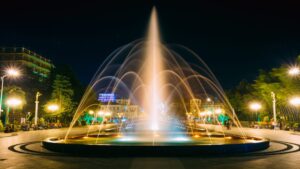
Water has always been an attractive element in landscape architecture. When combined with music, colourful lighting and advanced automation, it becomes something much more impressive: a synchronized musical fountain show.
Musical fountain construction involves designing and building an integrated water, lighting, sound and control system that creates choreographed performances in synchronization with music. It requires hydraulic engineering, specialized fountain nozzles, pumps, underwater LED lights, audio equipment and automated control technology.
In India, musical fountains are increasingly relevant to public parks, tourism destinations, commercial complexes, hotels, resorts, townships and entertainment spaces. A successful installation depends on more than attractive water patterns. Every technical component must work together to deliver a visually appealing, safe and reliable performance.
Let’s explore what goes into planning, designing and constructing a synchronized water show.
What Is Musical Fountain Construction?
Musical fountain construction is the process of developing a water feature that performs programmed movements according to music and lighting sequences.
Unlike conventional fountains that operate with continuous water flow, musical fountains use programmable equipment to control water height, direction, movement, timing and illumination.
For example, during a musical performance:
-
Water jets rise with the rhythm of the music.
-
Moving nozzles create dancing and sweeping water patterns.
-
LED lights change colours according to the programmed sequence.
-
Special water effects create dramatic visual transitions.
-
Audio systems deliver music to the viewing audience.
The result is an interactive visual experience in which water, sound and light become part of a single coordinated performance.
How Does a Musical Fountain Work?
A musical fountain works through an integrated hydraulic, electrical and digital control system.
The music is programmed into specialized fountain control software. The software sends instructions to the connected pumps, variable frequency drives (VFDs), valves, moving nozzles and lighting controllers.
Each component receives commands at specific times to create the required water movement and lighting effect.
A typical musical fountain system follows this sequence:
-
Music selection: Suitable music tracks are selected according to the theme and audience.
-
Show programming: Water movements, lighting transitions and special effects are mapped to the music.
-
Controller operation: The control system sends signals to the connected equipment.
-
Water movement: Pumps and nozzles produce the programmed water patterns.
-
Lighting synchronization: LED lights change colours and intensity according to the show sequence.
-
Audio playback: The sound system delivers the music to the audience.
All these operations are coordinated to produce a consistent performance.
Essential Components of a Musical Fountain
A professional musical fountain installation requires several interconnected components. Each plays an important role in determining the performance, appearance and reliability of the fountain.
1. Water Pumps and Hydraulic Systems
Core engineering component
Water pumps provide the pressure and flow required to produce different fountain effects. The pump selection depends on the desired jet height, water volume, nozzle configuration and overall fountain layout.
The hydraulic system generally includes:
-
Submersible or dry-installed water pumps.
-
Water distribution pipelines.
-
Valves and flow-control equipment.
-
Filters and water circulation arrangements.
-
Drainage and overflow systems.
Pump capacity and pipeline sizing must be calculated according to the required water effects. An improperly designed hydraulic system may result in inconsistent jet heights, pressure fluctuations or inefficient operation.
2. Fountain Nozzles and Water Effects
Nozzles determine the shape, direction and movement of water.
Different nozzle arrangements create different visual effects, allowing designers to develop unique fountain performances.
Common fountain effects include:
-
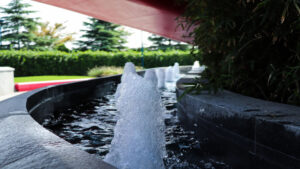
Vertical jets: Produce straight columns of water at different heights.
-
Fan jets: Create wide, fan-shaped water displays.
-
Dancing jets: Move dynamically according to programmed sequences.
-
Laminar jets: Produce smooth, defined streams of water.
-
Arch jets: Create curved water patterns.
-
Rotating jets: Generate circular or sweeping water movements.
The combination of different nozzles allows musical fountain designers to create complex water choreography.
3. Underwater LED Lighting
Lighting transforms a water display, particularly during evening performances.
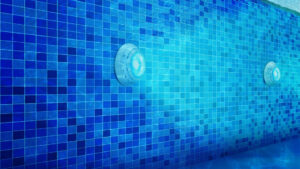
Underwater LED fixtures illuminate the water jets and surrounding fountain area. RGB lighting systems can produce multiple colours and dynamic transitions.
Important lighting considerations include:
-
Waterproof and appropriately rated fixtures.
-
RGB or RGBW colour capabilities.
-
Suitable brightness for the fountain’s size.
-
Proper underwater positioning.
-
Compatibility with the fountain control system.
-
Electrical protection and safe cable connections.
Lighting should complement the water patterns rather than overpower them. A well-planned lighting arrangement creates depth, contrast and visual interest throughout the show.
4. Sound Systems and Music Integration
Sound is an essential part of a synchronized water show.
A suitable audio system ensures that visitors can hear the music clearly from the intended viewing areas.
Depending on the project, the installation may include outdoor speakers, amplifiers, audio processors and centralized playback equipment.
The sound system should be planned around the venue’s dimensions, audience capacity, surrounding buildings and expected noise conditions.
5. Automation and Control Systems
The control system coordinates the entire performance.
It communicates with pumps, lighting equipment, moving nozzles and other automated devices to execute programmed sequences.
Depending on the project requirements, systems may use PLC-based automation, DMX512 lighting protocols, VFDs and specialized fountain show controllers.
The control system can manage:
-
Water jet movements and sequences.
-
Pump speed and flow adjustments.
-
Lighting colours and transitions.
-
Music playback synchronization.
-
Show scheduling and operating modes.
-
Emergency shutdown procedures.
This integration allows a musical fountain to perform programmed shows repeatedly without requiring manual operation of every individual component.
Step-by-Step Musical Fountain Construction Process
Successful musical fountain construction requires coordination between creative design, civil engineering, mechanical systems, electrical installation and automation.
The following stages explain how a typical project progresses.
Step 1: Site Inspection and Feasibility Assessment
The first stage involves understanding the proposed installation location.
The project team evaluates the available area, existing water body, ground conditions, water availability, electrical infrastructure and audience viewing positions.
For outdoor installations in India, local weather, wind conditions, seasonal rainfall and water management requirements should also be considered.
This assessment helps determine whether the proposed fountain concept is technically and practically suitable.
Step 2: Concept Development and Musical Fountain Design
After evaluating the location, designers develop the fountain concept.
The design depends on the project’s purpose, available space, architectural surroundings and desired visitor experience.
The planning stage may include:
-
Fountain layout and nozzle positioning.
-
Water jet heights and movement patterns.
-
Lighting arrangements.
-
Music and sound requirements.
-
Viewing angles and audience circulation.
-
Integration with existing landscaping.
A well-planned musical fountain design balances creative presentation with engineering requirements.
Step 3: Hydraulic and Mechanical Engineering
The engineering team determines the equipment required to produce the planned water effects.
This includes calculating pump capacities, selecting nozzle types, designing pipeline networks and determining water distribution requirements.
The design must ensure that the pumps and nozzles operate efficiently under the expected conditions.
Filtration, water circulation, drainage and maintenance access should also be considered at this stage.
Step 4: Civil Construction and Infrastructure Preparation
The next stage involves preparing the physical foundation of the fountain.
Depending on the project, civil work may include:
-
Construction of the fountain basin.
-
Waterproofing and structural preparation.
-
Pump room development.
-
Equipment foundations.
-
Pipeline trenches and cable routes.
-
Drainage and overflow arrangements.
The basin and supporting structures must accommodate the water load and installed equipment while allowing safe access for future servicing.
Step 5: Mechanical and Electrical Installation
Once the infrastructure is ready, the project moves into equipment installation.
Pumps, nozzles, pipelines, valves, underwater lights, electrical panels and control equipment are installed according to the approved technical drawings.
Electrical connections require suitable waterproofing, earthing, circuit protection and isolation arrangements.
Coordination between mechanical and electrical teams is essential to avoid installation conflicts.
Step 6: Software Programming and Music Synchronization
This is where the fountain becomes a coordinated performance system.
The selected music is programmed into the show control system. Water movements, lighting changes and other effects are assigned to specific musical sequences.
The programming team adjusts the timing, intensity and transitions to achieve the desired visual result.
Different music tracks may require different choreography, allowing the fountain to deliver multiple performances.
Step 7: Testing, Commissioning and Handover
Before the fountain becomes operational, the complete installation must undergo testing.
The commissioning process generally includes:
-
Checking pump performance and water pressure.
-
Inspecting nozzle operation.
-
Testing lighting and electrical systems.
-
Verifying control system communication.
-
Checking audio output.
-
Running complete synchronized performances.
-
Testing safety and emergency shutdown functions.
After successful testing, the operating team should receive relevant documentation, equipment instructions and maintenance guidance.
Different Types of Musical Fountain Designs
Musical fountains can be customized according to the available space, project objectives and architectural environment.
| Fountain type | Main characteristics | Suitable locations |
|---|---|---|
| Dancing fountain | Programmable water movements | Parks, resorts and entertainment venues |
| Floating musical fountain | Installed on a lake or water body | Tourism destinations and waterfronts |
| Musical water screen | Water curtain for projection effects | Public attractions and event spaces |
| Interactive fountain | Audience-responsive water effects | Public plazas and recreational areas |
| Architectural musical fountain | Integrated with landscape and building design | Hotels, townships and commercial properties |
Each design has different engineering and installation requirements. The right choice depends on the site conditions and the intended visitor experience.
Where Can Musical Fountains Be Installed?
Musical fountains can enhance several types of commercial and public environments.
1. Public parks and gardens: Large synchronized water displays can become major attractions for families and visitors.
2. Hotels and resorts: Musical fountains can improve outdoor entertainment spaces, landscaped gardens and hospitality experiences.
3. Shopping malls and commercial complexes: Decorative synchronized fountains can create attractive gathering points and improve the visual character of outdoor spaces.
4. Tourism destinations: Large-scale water and light shows can become part of a destination’s entertainment and visitor engagement strategy.
5. Residential townships: Premium residential developments may incorporate musical fountains into landscaped recreational areas.
6. Banquet and entertainment venues: Custom water features can enhance outdoor event spaces and create distinctive visual experiences.
Important Factors Before Musical Fountain Installation
Before investing in a musical fountain, project owners should evaluate several practical considerations.
-
Available space: The fountain layout should match the site dimensions and viewing distance.
-
Water availability: Assess water supply, storage, circulation and treatment requirements.
-
Electrical infrastructure: Ensure sufficient electrical capacity and suitable protection.
-
Wind conditions: Outdoor wind can affect water patterns and cause unwanted splashing.
-
Safety: Plan suitable barriers, electrical isolation, emergency controls and public access arrangements.
-
Maintenance access: Pumps, filters, nozzles and control equipment should be accessible for servicing.
-
Operating costs: Consider electricity, water treatment, cleaning, repairs and staffing.
-
Local permissions: Check applicable building, electrical, environmental and public-safety requirements.
Considering these factors early can help reduce technical complications during construction and operation.
What Affects Musical Fountain Construction Costs in India?
The cost of musical fountain construction in India depends on the project’s scale, technical specifications and installation conditions. There is no single price that applies to every fountain.
Some of the main cost factors include:
| Cost factor | How it influences the budget |
|---|---|
| Fountain dimensions | Larger installations generally require more infrastructure and equipment |
| Nozzle configuration | Specialized moving and programmable nozzles can increase costs |
| Pump capacity | Higher flow and pressure requirements affect equipment selection |
| Lighting systems | Fixture quantity, quality and control capabilities influence investment |
| Audio equipment | Coverage requirements and sound quality affect system selection |
| Automation | Advanced control systems and programming add to project complexity |
| Civil construction | Basin size, waterproofing and structural work affect costs |
| Installation location | Site accessibility and infrastructure availability influence execution |
Additional expenses may include transportation, commissioning, software programming, staff training and annual maintenance.
For an accurate estimate, project owners should request a detailed quotation based on site measurements, technical requirements and the proposed fountain concept.
Why Choose Professional Musical Fountain Contractors?
Musical fountain projects involve several specialized disciplines. Hiring experienced musical fountain contractors helps ensure that design, engineering, equipment installation and programming are properly coordinated.
When evaluating a contractor, consider the following:
-
Technical expertise: Check their understanding of hydraulic, mechanical, electrical and automation systems.
-
Design capabilities: Ask whether they can develop customized fountain layouts and visual concepts.
-
Equipment specifications: Review the proposed pumps, nozzles, lighting fixtures and control equipment.
-
Project execution: Understand their responsibilities for civil coordination, installation and commissioning.
-
Programming capabilities: Confirm that the team can create and adjust synchronized fountain shows.
-
Maintenance support: Discuss spare parts, servicing arrangements and technical assistance.
-
Project documentation: Request technical drawings, equipment schedules and operating manuals.
A contractor should be able to explain not only how the fountain will look but also how the complete system will function after installation.
Maintenance and Long-Term Performance
A musical fountain needs regular maintenance to maintain its appearance and operating performance.
Without proper servicing, mineral deposits, debris, clogged nozzles and electrical problems can affect the quality of the show.
A suitable maintenance programme should include:
-
Regular cleaning of fountain nozzles.
-
Inspection of pumps, valves and pipelines.
-
Checking water quality and filtration.
-
Cleaning underwater LED fixtures.
-
Inspecting electrical connections and protection systems.
-
Testing automation and show programming.
-
Reviewing audio and lighting performance.
-
Checking drainage and overflow systems.
The maintenance schedule should be based on the equipment manufacturer’s recommendations, water conditions and operating frequency.
Preventive maintenance can help identify potential problems before they interrupt scheduled performances.
Frequently Asked Questions (FAQs)
1. What is musical fountain construction?
Musical fountain construction is the process of designing and installing an automated water feature that synchronizes water movements, lighting and music. It involves pumps, nozzles, pipelines, LED lights, sound equipment and specialized control systems.
2. How does a musical fountain synchronize with music?
A musical fountain uses a digital control system that sends programmed commands to pumps, valves, moving nozzles and lighting equipment. These commands coordinate water movements and lighting transitions with specific parts of a music track.
3. What equipment is required for musical fountain installation?
The main equipment includes water pumps, fountain nozzles, pipelines, valves, underwater LED lights, electrical panels, control systems, audio equipment and water filtration arrangements. The exact equipment depends on the fountain design and project requirements.
4. How long does it take to construct a musical fountain?
The construction timeline depends on the fountain’s size, design complexity, civil infrastructure, equipment availability and programming requirements. A small installation may require considerably less time than a large public attraction. A project-specific schedule should be prepared after site assessment.
5. Can musical fountains be installed in existing lakes and ponds?
Yes. Musical fountains can be designed for suitable existing lakes and ponds. However, water depth, structural conditions, water quality, anchoring requirements, electrical infrastructure and environmental considerations must be evaluated before installation.
6. Are musical fountains suitable for hotels and commercial properties?
Yes. Musical fountains can be customized for hotels, resorts, shopping complexes, commercial developments, residential townships and entertainment venues. Their design can be adapted to the available space and intended visitor experience.
7. What is the difference between a regular fountain and a musical fountain?
A regular fountain generally operates with fixed or continuous water patterns. A musical fountain uses automated controls to coordinate water movement, lighting and sound, producing programmed performances.
8. How much maintenance does a musical fountain require?
Musical fountains require periodic cleaning, pump inspections, nozzle servicing, water treatment, lighting checks and electrical system inspections. Maintenance frequency depends on operating hours, water conditions and equipment specifications.
9. How do I select the right musical fountain contractors in India?
Evaluate the contractor’s engineering knowledge, design capabilities, equipment specifications, installation experience, automation expertise, commissioning process and after-sales maintenance support. Request a detailed technical proposal before finalizing the project.
10. Can a musical fountain have customized music and lighting effects?
Yes. Music tracks, water movements, lighting colours and performance sequences can be customized according to the project’s theme, audience and technical capabilities.
Conclusion
A successful musical fountain is the result of creative vision supported by precise engineering and reliable technology. From hydraulic planning and specialized nozzles to underwater lighting, sound integration and automated programming, every component contributes to the final performance.
For projects in India, careful planning is particularly important to account for site conditions, weather, water management, electrical infrastructure and long-term maintenance.
Whether the requirement is a decorative fountain for a hotel or a large synchronized water attraction for a public destination, choosing the right design and construction approach can make a significant difference.
RES Group provides fountain construction services covering customized water features and fountain installations. If you are planning a new fountain project, explore the available solutions and discuss your project requirements with Our team.
Plan a distinctive water feature with RES Group: Explore Fountain Construction Services in India.