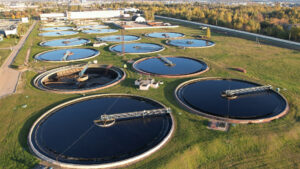
Have you ever paused to consider where the water goes after it vanishes down your drain during everyday routines? As water scarcity impacts billions globally, dependable waste water treatment solutions become essential for preserving this vital resource. These solutions guarantee that wastewater undergoes thorough purification prior to rejoining natural waterways.
Sewage treatment serves as the foundation of contemporary public health systems. It converts polluted wastewater into safer forms via structured methods. In rapidly urbanizing nations like India, advanced strategies gain momentum to tackle escalating pollution issues. Furthermore, innovative sewage treatment solutions prove instrumental in fostering sustainable urban development.
The immense daily wastewater output underscores the problem’s magnitude. Current assessments reveal that urban India produces approximately 72,368 million liters per day (MLD) of sewage. Installed treatment capacity stands at around 31,841 MLD, though actual utilization hovers near 26,869 MLD. This significant shortfall stresses the pressing requirement for expanded waste water treatment solutions. Next, we examine diverse approaches and their suitability for various contexts.
What Is Sewage Treatment?
Sewage treatment encompasses the procedures designed to eliminate impurities from wastewater originating in homes, businesses, and factories. Reliable waste water treatment solutions effectively manage organic materials, disease-causing agents, nutrients, and toxic substances, yielding effluent suitable for environmental release or recycling. Contemporary plants incorporate multi-phase operations to achieve superior outcomes.
Wastewater initially gathers through subterranean pipelines. Processing subsequently involves mechanical removal, microbial decomposition, and chemical balancing. In India, programs such as Namami Gange focus on enhancing facilities along key rivers. As a result, numerous areas experience diminished contamination levels.
Fundamental goals center on safeguarding human well-being and natural habitats. Unprocessed releases propagate illnesses and deoxygenate aquatic environments. Evidence suggests that deficient processing plays a major role in national surface water degradation. Dependable waste water treatment solutions therefore curb epidemics and bolster ecological diversity.
The overall mechanism divides into distinct phases. Preliminary steps eliminate bulky items. Primary settling follows, capturing dense solids. Secondary biology then degrades dissolved organics. Advanced polishing, when applied, targets residuals like nitrogen or phosphorus.
Operators monitor parameters continuously. Biochemical oxygen demand (BOD) measures organic load. Chemical oxygen demand (COD) indicates total oxidizable matter. Total suspended solids (TSS) track particulates. Compliance ensures effluent meets discharge norms.
In practice, plants adapt to local conditions. Coastal sites may prioritize salinity tolerance. Industrial zones handle specific contaminants. Residential areas focus on pathogen reduction.
Sludge, the byproduct, requires separate handling. Digestion stabilizes it anaerobically, producing biogas. Dewatering prepares it for disposal or beneficial use like fertilizer.
Overall, sewage treatment transforms waste into opportunity. Treated water supports irrigation. Biogas generates energy. Nutrients enrich soils.
Types of Sewage Treatment Systems
Multiple systems exist to process sewage, each tailored to particular volumes and settings. Centralized facilities manage metropolitan demands, whereas decentralized setups fit isolated locations. Numerous areas increasingly embrace combined sewage treatment solutions to enhance adaptability and performance.
Preliminary and Primary Treatment
Early phases focus on removing oversized objects and settleable matter. Bar screens and grit basins trap rags, plastics, and sand. Sedimentation basins permit heavy solids to drop, eliminating up to 60% of suspendeds.
Across Indian municipalities, primary processes provide the base layer before further refinement. Modern upgrades frequently retain these fundamentals for consistent operation.
Primary clarifiers operate quietly. Wastewater enters slowly, allowing gravity separation. Scum skims from the surface. Sludge collects at the bottom for removal.
Chemical coagulants sometimes aid flocculation. Aluminum or iron salts aggregate fine particles. This boosts removal efficiency.
Though simple, primary treatment reduces downstream loads significantly. It protects biological units from abrasion. It lowers energy demands in aeration.
Secondary Treatment: Biological Processes
Biological stages dominate contaminant breakdown. Aerobic organisms metabolize organics in oxygen-rich conditions.
The Activated Sludge Process (ASP) mixes wastewater with returned sludge in aeration basins. Blowers supply air, sustaining microbial activity. Final clarifiers separate treated water from settled biomass.
ASP prevails in large-scale Indian installations. It achieves 85-95% BOD reduction reliably.
Sequential Batch Reactors (SBR) consolidate steps in single tanks. Programmable cycles—fill, aerate, settle, decant—offer versatility. Automation minimizes staffing needs.
SBR excels in fluctuating inflows. Tourism hubs benefit from its adaptability.
Moving Bed Biofilm Reactors (MBBR) suspend plastic carriers for biofilm attachment. Constant motion prevents clogging. Compact footprint suits retrofits.
MBBR integrates easily with existing infrastructure. It tolerates shock loads well.
Detailed Examination of Activated Sludge Process
ASP relies on mixed liquor suspended solids (MLSS). Return rates maintain population balance. Waste sludge controls growth.
Aeration consumes substantial energy. Fine bubble diffusers improve efficiency. Variable speed blowers optimize oxygen transfer.
Nitrification occurs when conditions allow. Ammonia converts to nitrate. Denitrification follows in anoxic zones, removing nitrogen.
Phosphorus uptake happens via luxury consumption. Chemical precipitation supplements if needed.
Monitoring tracks sludge volume index (SVI). Low values indicate good settling.
Challenges include bulking from filamentous bacteria. Selector zones promote floc-formers.
Sequential Batch Reactors in Depth
SBR phases adjust dynamically. Equalization buffers peaks. Decant mechanisms ensure clear supernatant.
Nutrient removal integrates seamlessly. Alternating aerobic-anoxic periods cycle nitrogen forms.
Sludge age control enhances stability. Excess withdrawal maintains balance.
Real-time sensors guide operations. Dissolved oxygen probes trigger aeration.
Indian examples in expanding suburbs showcase SBR scalability.
Moving Bed Biofilm Reactor Mechanics
Carriers provide vast surface area. Biofilms develop layered communities. Outer aerobes, inner anaerobes.
No recirculation needed. Media retention screens prevent loss.
Hybrid configurations combine suspended and attached growth. Resilience increases.
Upgrades convert conventional plants cost-effectively.
Tertiary Treatment: Advanced Purification
Tertiary processes refine secondary effluent. Filtration removes residuals. Disinfection eliminates pathogens.
Membrane Bioreactors (MBR) merge biology with micro/ultrafiltration. Submerged membranes retain biomass. High-quality output enables direct reuse.
MBR dominates water-scarce metros. It produces near-potable standards.
Sand or disc filters polish conventionally. Backwashing regenerates media.
Chemical disinfection uses chlorine or ozone. UV irradiation avoids residuals.
Nutrient recovery employs struvite precipitation. Algal systems uptake phosphorus.
Advanced oxidation degrades recalcitrants. Fenton reagents or photocatalysis apply.
Membrane Bioreactor Operations
Membranes operate under vacuum or pressure. Permeate pumps draw clear water.
Air scouring mitigates fouling. Relax cycles extend life.
Cassettes facilitate maintenance. Cleaning protocols restore flux.
Indian industrial parks adopt MBR for zero discharge.
Nature-Based and Decentralized Systems
Constructed wetlands harness vegetation and substrates. Root zones filter pollutants. Evapotranspiration reduces volume.
Wetlands suit peri-urban fringes. Biodiversity enhances value.
Septic tanks provide onsite anaerobic digestion. Leach fields disperse effluent.
Bio-digesters accelerate breakdown. Packaged units serve clusters.
Phytoremediation employs hyperaccumulators. Heavy metals sequester in biomass.
Constructed Wetlands Design
Surface or subsurface flow variants exist. Reeds dominate planting. Gravel matrices support microbes.
Hydraulic retention time governs performance. Seasonal variations affect.
Monitoring tracks outflow quality. Vegetation harvesting removes nutrients.
Rural Indian deployments demonstrate viability.
Septic Systems Enhancements
Baffled reactors improve settling. Anaerobic filters boost efficiency.
Effluent polishing via soil absorption. Mound systems elevate drains.
Regular pumping prevents failures. Inspections ensure longevity.
Comparison of Treatment Systems
The following table summarizes key attributes:
| System Type | Mechanism | BOD Removal (%) | Space Needs | Application Scenario | Energy Use |
|---|---|---|---|---|---|
| Activated Sludge (ASP) | Suspended growth aeration | 85-95 | High | Metropolitan facilities | High |
| Sequential Batch Reactor (SBR) | Cyclic batch processing | 90-98 | Medium | Variable inflow zones | Medium |
| Moving Bed Biofilm (MBBR) | Attached growth on media | 80-90 | Low | Retrofitting existing | Medium |
| Membrane Bioreactor (MBR) | Membrane separation + biology | 95-99 | Low | Reuse-oriented projects | High |
| Constructed Wetlands | Plant-microbe filtration | 70-90 | High | Rural or sensitive areas | Low |
| Septic Tanks | Anaerobic settling | 50-70 | Low | Isolated residences | None |
| Trickling Filters | Fixed film over media | 80-85 | Medium | Small towns | Low |
| Upflow Anaerobic Sludge Blanket (UASB) | Anaerobic granulation | 70-80 | Medium | Warm climates | Low |
This matrix aids selection. Urban density favors compact options. Budget constraints lean toward passive systems.
Additional systems include:
- Trickling Filters: Wastewater trickles over stone or plastic. Biofilms oxidize organics.
- UASB: Upward flow granulates anaerobes. Biogas captures energy.
- Facultative Ponds: Algal-bacterial symbiosis. Sunlight drives oxygenation.
Each contributes uniquely.
The Importance of Effective Sewage Treatment
Robust sewage treatment protects communities by eradicating pathogens responsible for outbreaks. In India, millions suffer annually from waterborne diseases. Properly treated discharges slash transmission risks dramatically.
Ecologically, it prevents eutrophication. Excess nutrients trigger algal blooms, depleting oxygen. Fish kills follow. Biodiversity declines.
Treated effluent replenishes aquifers. Irrigation applications conserve potable supplies. Industrial recycling closes loops.
Economically, it sustains agriculture. Polluted rivers erode productivity. Clean water supports fisheries and tourism.
Socially, equitable access reduces disparities. Vulnerable groups bear disproportionate burdens from contamination.
Globally, it aligns with Sustainable Development Goals. Target 6.3 aims halved untreated wastewater by 2030.
In India, river rejuvenation hinges on treatment. Ganga cleanup illustrates impacts.
Sewage Treatment Challenges and Solutions in India
Urban India generates vast sewage volumes. Capacity lags, treating roughly 37% installed and 28% actually. Rivers suffer accordingly.
Underutilization stems from poor maintenance. Power outages disrupt operations. Skilled personnel shortages persist.
Collection networks remain incomplete. Open drains prevail in peripheries.
Funding constraints delay expansions. Operation costs burden municipalities.
Solutions emerge progressively. Public-private partnerships mobilize capital. Performance-based contracts incentivize efficiency.
Decentralized plants bypass extensive sewers. Containerized units deploy rapidly.
Community participation fosters ownership. Awareness campaigns promote connections.
Policy mandates reuse. Bulk users recycle portions.
State variations highlight disparities. Maharashtra leads capacity. Uttar Pradesh trails relatively.
Namami Gange advances Ganga basin. Over 300 projects complete. Treatment capacity surges.
AMRUT targets urban transformation. Septage management complements.
Swachh Bharat integrates sanitation.
Combined efforts narrow gaps.
Addressing Common User Queries
Many inquire about home-level options. Packaged plants suit apartments. Composting toilets reduce loads.
Industrial concerns focus compliance. Zero liquid discharge mandates drive innovation.
Rural queries favor low-cost. Biodigesters convert waste to fuel.
High-density challenges prompt modular expansions. Prefabricated SBRs fit.
Sludge poses dilemmas. Composting yields manure. Incineration recovers heat.
Energy recovery gains traction. Biogas powers plants.
Monitoring ensures accountability. Real-time sensors flag deviations.
Technological Advancements in Sewage Treatment
Innovation accelerates efficiency. Sensors enable predictive maintenance. AI optimizes dosing.
Nanomaterials enhance adsorption. Graphene filters trap micropollutants.
Electrochemical processes disinfect sustainably. Electrocoagulation aggregates solids.
Forward osmosis concentrates brines. Energy recovery devices cut consumption.
Resource recovery extracts value. Phosphorus struvite sells as fertilizer.
Carbon capture from biogas purifies methane.
Digital twins simulate scenarios. Operators test upgrades virtually.
Indian startups pioneer frugal tech. Solar drying dewaters sludge.
Hybrid anaerobics precede aerobes. Energy savings reach 50%.
Environmental and Health Impacts of Untreated Sewage
Untreated flows devastate rivers. Hypoxia suffocates life. Toxics bioaccumulate.
Groundwater contamination spreads risks. Wells turn unsafe.
Air odors degrade livability. Vector breeding rises.
Health tolls mount. Diarrhea kills children primarily.
Economic losses accrue. Healthcare burdens strain budgets.
Treatment reverses trajectories. Oxygen levels rebound. Species return.
Case Studies: Successful Implementations in India
Devanahalli near Bengaluru treats airport sewage via SBR. Reused water irrigates landscapes.
Delhi’s Okhla plant, Asia’s largest, employs ASP variants. Upgrades meet stringent norms.
Chennai recycles for industries. MBR delivers clarity.
Pune integrates wetlands. Natural polishing shines.
Surat diamond hub achieves high reuse. Polished effluent cools machinery.
These models inspire replication.
Best Practices for Sewage Treatment Implementation
Success demands holistic planning. Feasibility studies precede design.
Stakeholder engagement builds consensus. Training equips operators.
Performance auditing sustains quality. Third-party verification adds credibility.
Key practices:
- Prioritize source separation where feasible.
- Design for scalability and resilience.
- Incorporate energy audits early.
- Plan sludge end-use proactively.
- Monitor effluent rigorously.
- Foster public-private synergies.
- Emphasize reuse integration.
- Maintain emergency protocols.
- Document lessons learned.
- Review periodically.
Adherence yields durable assets.
Future Trends in Sewage Treatment
Decentralization accelerates. Smart micro-plants proliferate.
Circular economy principles dominate. Waste becomes feedstock.
Climate resilience informs design. Flood-proofing rises.
Digitalization transforms management. Blockchain tracks compliance.
Nature-based hybrids gain. Sponge cities absorb runoff.
Policy evolves. Stricter norms drive excellence.
By 2030, reuse targets escalate. 100% treatment nears.
India aims leadership. Innovation hubs emerge.
Conclusion
Sewage treatment spans preliminary screening to advanced recovery, each element critical for wastewater management. Its significance spans health protection, environmental stewardship, and resource conservation—particularly urgent in India amid urbanization pressures. Embracing robust waste water treatment solutions enables circular water economies. Communities or facilities seeking enhancements may benefit from specialized guidance toward sustainable outcomes.
FAQs
What defines the primary stages of sewage treatment?
Preliminary removal of solids precedes primary sedimentation. Secondary biology degrades organics. Tertiary polishing ensures reuse safety.
How does proper sewage treatment aid ecosystems?
It curtails nutrient enrichment, averts oxygen depletion, and sustains aquatic habitats.
Why does India face sewage treatment deficits?
Generation outpaces infrastructure. Maintenance and network gaps compound issues.
Which system suits dense urban environments best?
Membrane bioreactors or SBRs excel in footprint and quality.
Is treated sewage reusable securely?
Advanced treatment permits non-potable applications like irrigation or industry, per guidelines.